Pitahaya (fire dragon fruit) has become one of China's highest-value tropical fruits, with premium varieties commanding 3–5× the price of conventional dragon fruit. But growers in Yunnan faced a fundamental bottleneck: conventional irrigation couldn't deliver the precision nutrition timing that high-grade pitahaya requires to hit consistent fruit weight, color and sugar content. The margin difference between a well-irrigated crop and a poorly managed one is not marginal — it's the difference between premium and commodity pricing.
"Israel built drip irrigation for the desert. We brought that same precision to Yunnan's jungle highlands — and taught it to understand pitahaya."
The Challenge: A Cactus That Cannot Afford Mistakes
Pitahaya is a cactus. It stores water efficiently and tolerates drought — but it is devastatingly sensitive to overwatering. Too much moisture at the wrong growth stage causes root rot; insufficient nutrition during fruit fill reduces berry size and brix (sugar content). The plant's needs shift dramatically between its six growth stages, and manual irrigation cannot track those shifts with sufficient precision.
The JJR Solution: Israel–China Precision Nutrition
JJR partnered with Israeli precision agriculture specialists to co-develop a pitahaya-specific full-cycle plant nutrition protocol — the first of its kind applied at commercial scale in China. The program covers six distinct growth stages, each with defined EC targets, macro/micronutrient ratios, and irrigation frequency schedules:
- Stage 1–2 (Establishment & Vegetative): High nitrogen, low phosphorus. Drip frequency 2×/day. EC target 1.2–1.6 mS/cm.
- Stage 3–4 (Flowering & Fruit Set): Shift to high potassium. Irrigation reduced to prevent fruit splitting. EC raised to 1.8–2.2 mS/cm.
- Stage 5–6 (Fruit Fill & Post-Harvest): Calcium and boron supplementation for skin firmness. Recovery fertigation after harvest to prepare for the next cycle.
This protocol runs automatically inside JJR's fertigation controllers. Farm managers review daily AI-generated crop reports through the Data Farm app — rather than manually mixing or scheduling fertilizer applications.
Before vs. After Implementation
Before JJR
- Generic irrigation schedule — no stage awareness
- Manual fertilizer ratios, prone to error
- No root zone monitoring
- Inconsistent fruit weight & brix
After JJR
- 6-stage nutrition protocol auto-executed
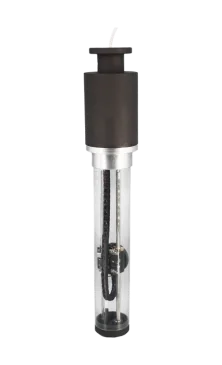
- Root zone sensors trigger irrigation on demand
- Daily AI advisory replaces manual decisions
- Higher brix, uniform fruit size, premium pricing
Applicable Across Southeast Asia
Pitahaya cultivation is booming across Vietnam, Malaysia, Thailand and the Philippines. JJR's Yunnan-proven system and the Israel–China nutrition protocol are fully transferable to these tropical markets — with local soil calibration performed on-site by JJR's agronomy team. The same precision that commands premium pricing in Yunnan is available to plantation operators across the region.